
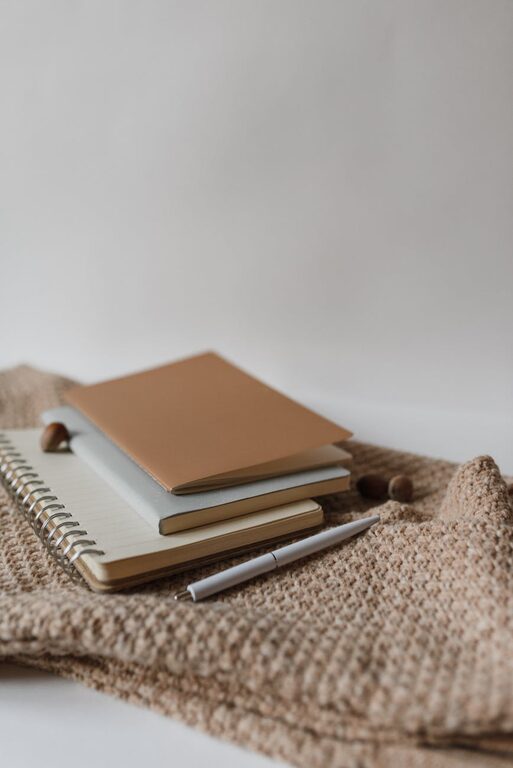
Choosing the right notebook might seem like an easy task, but if you’ve ever bought a beautiful journal only to let it sit unused, you know it can be more complicated than it appears. The perfect notebook is one that you’ll actually use—whether for jotting down ideas, planning your day, or keeping a journal. In this post, we’ll explore practical tips to help you find a notebook that matches your lifestyle and keeps you motivated.
Understand Your Purpose
Before diving into styles and sizes, think about why you want a notebook. Different uses call for different features.
– Journaling: Do you want to record thoughts, feelings, or daily reflections? You might prefer a notebook with lined pages to guide your writing.
– Note-taking: For school or meetings, a spiral bound notebook with perforated pages can be handy.
– Planning and organizing: A planner or a dot-grid notebook can help you create lists, calendars, and habit trackers.
– Creative work: Sketching or brainstorming might require blank or grid paper to free your creativity.
Knowing your intended use narrows down your options and helps prevent impulse buys that don’t suit your needs.
Consider Size and Portability
Notebooks come in many sizes, and choosing the right one depends on where and how you plan to use it.
– Pocket-sized (A6 or smaller): Fits easily into purses or pockets, great for quick notes on the go.
– Medium (A5): A popular size that balances portability with enough writing space.
– Large (A4 or letter size): Best for detailed work, planning, or extensive note-taking but less portable.
If you travel often or like to write while commuting, portability might be a priority. If most of your writing happens at a desk, a larger notebook may be more comfortable.
Pay Attention to Paper Quality
The feel of the paper influences your writing experience more than you might expect.
– Weight: Heavier paper (around 80 gsm or higher) prevents ink bleed-through and feels more substantial.
– Texture: Smooth paper works well with ballpoint or gel pens; textured paper is preferred for pencils or fountain pens.
– Color: Off-white or cream pages can be easier on the eyes than bright white.
If you use fountain pens or markers, test the notebook beforehand if possible. Many stores allow you to try writing samples.
Choose Binding That Fits Your Style
The binding affects how easy it is to write in your notebook and how durable it will be.
– Spiral binding: Allows the notebook to lie flat and provide full-page access, but can be bulky.
– Sewn binding: Durable and opens flat nicely; often found in higher quality notebooks.
– Glue binding (perfect binding): Sleek appearance but less durable and may not open easily.
– Ring binders: Customizable but less portable.
Think about what feels comfortable when writing and how you plan to store or carry your notebook.
Look for Additional Features
Sometimes extras make a notebook more enjoyable and practical.
– Page numbers and index: Great for organization and quick reference.
– Perforated pages: Easy to tear out notes without damage.
– Pocket folders: Useful for keeping receipts, papers, or stickers.
– Elastic closures: Keeps your notebook securely closed.
– Ribbons or bookmarks: Helps mark your place.
– Cover material: Durable covers (leather, hardboard) protect your notebook better for long-term use.
Decide which features are must-haves and which are nice-to-have.
Trust Your Personal Style
A notebook that appeals to your aesthetic preferences can motivate you to write more.
– Choose colors, patterns, or designs that make you happy.
– If you prefer minimalism, select a clean, simple cover.
– If you like to personalize, look for notebooks where you can add stickers or embellishments.
Your notebook should be something you’re proud to carry and use every day.
Test Before You Commit
If possible, visit stationery stores to feel the notebooks, flip through pages, and try writing a few lines. Buying in person reduces the chance of disappointment. If shopping online, check reviews and look for detailed photos.
Maintain and Use Your Notebook Regularly
Once you pick your notebook, the key to actually using it is to establish a habit.
– Keep it accessible by your workspace or bag.
– Dedicate a few minutes daily or weekly to write.
– Don’t worry about perfection—use it as a tool, not a chore.
– Experiment with different styles of writing or planning to keep things fresh.
Final Thoughts
Choosing a notebook you’ll actually use is about matching your needs, habits, and style. By considering purpose, size, paper, binding, features, and design, you increase the chances of picking a notebook that becomes your trusted companion. Remember, the best notebook is the one that feels right and inspires you to fill its pages.
Happy writing!